Evil Eye Embroidery Design Review
First Impressions: Mood, Layout & Stitching Personality
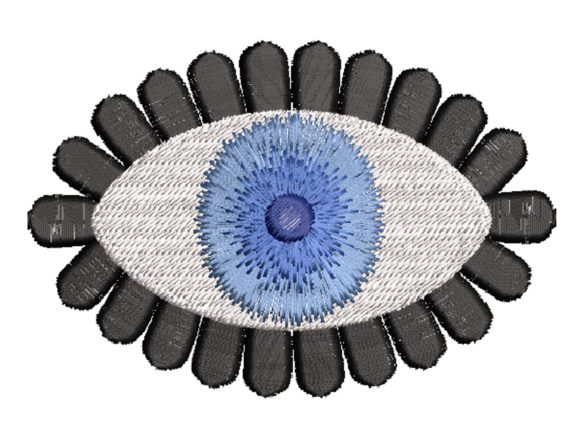
As a designer who’s stitched over 300 boutique apparel drops, my first glance at Evil Eye told me everything I needed to know before hooping a single sweatshirt: this isn’t just decorative—it’s intentional. The layout balances sacred geometry with boho spontaneity—curved eyelashes, a softly concentric iris, and subtle radial thread movement that reads as hand-drawn, not digitized. There’s no harsh vector rigidity; instead, the stitch paths breathe like ink on linen. That’s critical for sweatshirt embroidery, where stiffness kills charm. The design feels simultaneously protective and playful—neither overly mystical nor kitschy—and lands perfectly in the sweet spot for a premium small shop product: quietly confident, culturally resonant, and deeply wearable.
How Evil Eye Lives on Real Sweatshirts
I tested Evil Eye across five fabric scenarios common to boutique brands: charcoal French terry hoodies, oatmeal oversized crewnecks, blush heathered sweatshirts, navy loopback fleece, and ivory organic cotton blends. On dark fabric, the design gains gravitas—especially with matte black or deep indigo thread colors. It doesn’t shout; it anchors. On pastels, a soft ecru or dusty rose thread lifts the motif without saccharine sweetness. For oversized hoodies, chest placement (centered 3–4” below the neckline) lets the eye “breathe” in negative space—no crowding, no visual fatigue. As a sleeve accent? Smaller-scale versions hold up beautifully near the cuff, adding quiet narrative without competing with logos or branding. And yes—it works powerfully on the back of a cropped hoodie, scaled to 4.5”, where its symmetry becomes a focal point in lifestyle product photography.
Premium Feel vs. Casual Execution
Evil Eye reads as premium—not because it’s fussy, but because it’s restrained. There’s zero fill-heavy clutter. The stitch density feels calibrated: enough coverage to read cleanly on textured fabric, but light enough to drape naturally over ribbed cuffs and relaxed necklines. No puddling, no puckering—even on midweight fleece. That tells me the digitizing prioritized fabric texture over pixel-perfect replication. It’s feminine without being floral, bold without being graphic, minimal without feeling empty. It leans into boho authenticity rather than trend-chasing, which builds long-term brand identity for Etsy sellers and handmade product lines.
Practical Designer Considerations
Before stitching your first batch, here’s what matters:
- Thread color contrast: Avoid ultra-light threads on heathered greys—they’ll vanish. Opt for tonal depth: charcoal grey on black, warm taupe on oatmeal, or oxidized gold on navy for subtle luxury.
- Stabilizer choice: A medium-weight cutaway works best for commercial embroidery on sweatshirts—especially for the eyelash detail and curved iris edges. Tear-away can cause distortion on stretchy knits.
- Fabric thickness & hoop placement: This design handles 10–14 oz fleece well—but always test on scrap with your exact garment. Center-hooping is safest; avoid placing too close to side seams where tension shifts.
- Small-size readability: At 2.75”, the pupil and inner ring remain legible on chest placements. Below 2.25”, fine details soften—so stick to recommended minimums for small shop product consistency.
- Washing durability: Tight satin stitches around the outer circle + strategic underlay suggest strong wash resistance. Still, advise customers to turn garments inside-out before laundering—a small touch that reinforces handmade presentation trust.
Commercial Impact: Beyond the Stitch
For small clothing brands and embroidery shops, Evil Eye does more than decorate—it differentiates. In a sea of generic florals and script logos, this machine embroidery design carries instant visual recognition. Customers remember symbols; they don’t remember fonts. That boosts repeat engagement, especially for Etsy sellers building curated collections. When styled in printable mockups or flat-lay photos, Evil Eye elevates perceived value: it signals intentionality, craftsmanship, and cultural awareness—not mass production. That perception translates directly to pricing confidence. You’re not selling a sweatshirt—you’re offering protection, personality, and presence. And for boutique brands anchoring seasonal drops (think cozy autumn layers or spring renewal themes), Evil Eye becomes a recurring design asset—versatile across hoodies, joggers, and even tote bags—without diluting identity.
Final Notes for Creative Entrepreneurs
This isn’t just another embroidery file. Evil Eye is a storytelling tool. Its strength lies in restraint, rhythm, and resonance—qualities that scale beautifully from one-off handmade product runs to limited custom apparel batches. That said: always verify the digital embroidery file includes multiple hoop sizes and compatible formats for your machine. Confirm stitch count and recommended stabilizer notes—those details aren’t in the listing, but they’re non-negotiable for production reliability. If you're sourcing for a small shop product line, ask the seller about commercial use rights upfront. And remember—your thread choice, fabric selection, and finishing care are part of the design, too. Evil Eye gives you the foundation. Your craftsmanship makes it unforgettable.